Two years after the Centre's flagship village electrification scheme Saubhagya concluded with the government claiming 99.9 per cent success, several states have added close to 1.1 million rural households that remain to be connected to the electricity grid. This new list includes earlier unwilling households that have now agreed to have a metered connection and also those built or discovered in the states' surveys since 2019. Assam and Uttar Pradesh are the states that have the majority of such new additions.
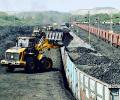
Eleven bidders, including Adani Enterprises, have shown interest in the first-ever coal import tender issued by national miner Coal India (CIL). Recently, state-owned NTPC awarded 6.25 million tonnes (mt) of imported coal tender worth Rs 8,300 crore to Adani Enterprises. CIL, in a public statement on Tuesday, said: "The prominent Indian agencies among them (11 coal importers) were Adani Enterprises, Mohit Minerals, and Chettinad Logistics. "A couple of coal exporting agencies from abroad, including one from Indonesia, have also shown interest," it said.
With the cooling down of heatwaves as the monsoon spreads across the country, power demand has fallen by 12.5 per cent from the start of this month till Monday. Peak power demand of the country had touched a record of 210 Gw last week, mostly due to rising temperatures and opening up of the economy. Compared with the beginning of this month, almost all states have seen a fall in power demand. Punjab, however, is an exception where the power demand on Monday was 17 per cent higher than on June 1.

Even as Union ministers allay misgivings over Agnipath, figures show a meagre 2.4 per cent of the ex-servicemen who applied for a government job could get one as the Centre and the states have been unable to recruit against the reserved quotas. Public sector undertakings (PSUs), ministries, and officials of Sainik Boards have blamed it on the lack of skill among ex-servicemen. They say veterans' inability to qualify in selection exams is one of reasons for this. Also, non-recognition of qualifications obtained from the military are reasons why their recruitment has remained significantly low, pushing them towards low-skill jobs.

The airlines' losses globally are expected to be down from $52 billion in 2021 to $9.7 billion this year and industry-wide profit should be on the horizon in 2023, Director General of IATA Willie Walsh said in Doha on Monday. International Air Transport Association (IATA) represents some 290 airlines comprising 83 per cent of global air traffic. Walsh, in his inaugural speech at the 78th annual general meeting of IATA here, said that while the outlook for airlines globally is positive, the business environment remains challenging.
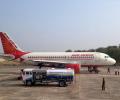
Tata Group-owned Air India is considering buying more than 200 new planes with 70 per cent of them being narrow-bodied aircraft, aviation industry sources said on Sunday. While Air India has zeroed in on Airbus's A350 wide-bodied aircraft for the procurement, the talks with Airbus and Boeing for narrow-bodied aircraft is still on, they said. A wide-bodied plane like Airbus A350 has a bigger fuel tank that allows it to travel longer distances such as the India-US routes.

The pilot, who was the first officer on the flight, landed the aircraft at the Indore airport recently without first getting the requisite training in a simulator, they said.

The aviation regulator Directorate General of Civil Aviation (DGCA) had last week imposed a fine of Rs 5 lakh on the airline for denying boarding to a specially abled child at Ranchi airport on May 7.
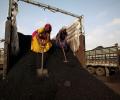
Coal production by Coal India (CIL) has grown slower than the captive mines, awarded over the last six years. During 2020-22, production from the captive mines jumped by 38.5 per cent while CIL saw a tepid growth of 3.4 per cent, according to government data. In terms of dispatch to the power sector, captive mines have raced ahead, witnessing a growth of 72 per cent compared to 15 per cent for CIL. For the current fiscal year, CIL's production is expected to be around 565 million tonnes.

The Union ministry of coal, while acknowledging that domestic coal stock is not enough to meet the power demand, asked state governments and the power generating companies (gencos) to import coal before monsoon season sets in. The ministry has warned the gencos if they do not import coal for 10 per cent blending in their fuel demand by the end of this month, blending benchmark would be increased to 15 per cent. The order pertains to all - central, state and independent power producers (IPPs)/privately owned units.
The Tata Group-run Air India has banned smoking and consumption of intoxicating substances at the workplace and any employee violating this order will be "dealt with appropriate consequences", the airline's Chief Human Resources Officer (CHRO) Suresh Dutt Tripathi has stated. It was not clear what was the trigger for Wednesday's communique. Air India did not respond to PTI's request for statement on this matter.

The commercial flight operations of Rakesh Jhunjhunwala-backed Akasa Air will be launched in July instead of June. "As we get closer to the airline launch date, we can now confirm refined estimates on our timelines. "We expect our first aircraft delivery by early June 2022, with the intention to start commercial operations in July 2022," Vinay Dube, CEO, Akasa Air, told PTI.

The relaxation has been given to facilitate "smooth conduct of air operations", the ministry's order stated.

SpiceHealth had on January 6 and January 7 tested 469 passengers who arrived on two charter flights from Italian capital Rome and found 298 of them to be COVID-19-positive.

The The Airports Authority of India is likely to procure two counter-drone systems worth Rs 9.9 crore in 2022-23, according to an official document.

As the Centre pushes reforms in the power sector, especially for the beleaguered electricity distribution segment, several states, especially those ruled by Opposition parties, are clamouring against it. Maharashtra, West Bengal, Tamil Nadu, and Kerela have voiced their reservations against the proposed amendments to the Electricity Act, 2003. The irony is the states opposing the amendments on the ground of threat of privatisation already have private partnerships in power supply. The proposed Bill was slated to be placed on the floor of Parliament in the Monsoon session. But it still awaits Cabinet approval amid several states complaining that they have been not consulted on the issue.

The Great Indian bustard is at the centre of another impending legal tussle. The government is planning to move the Supreme Court seeking a review of its order that asked Gujarat and Rajasthan to lay transmission lines linked to solar power units underground so as to not pose any threat to the endangered bird. The ministry of new and renewable energy (MNRE) has sought a view from the law ministry and will move the court basing its arguments on estimates showing that the bird's population was declining even before solar power plants came to the region, said a senior government official requesting anonymity.

Energy's exit is a cautionary tale for several foreign investors in India as close to 16 Gw of solar and wind power projects languish without any power purchase agreement, 24 Gw without transmission connectivity and around 2 Gw unilaterally cancelled by project developers.

According to government data, the Centre procured only 35,179 ventilators out of the 50,000 originally ordered.
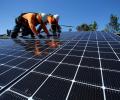
Glass shortage in China and the rising prices of imported glass used in finished solar panels have already hit the cost of solar panel imports. The cost of solar modules imported by India have increased 22 per cent since June last year. India imports close to 90 per cent of its solar cells and modules, of which nearly 80 per cent is from China. Domestic solar equipment makers import glass panels and are the largest suppliers in China. The price of a solar module glass has increased 150 per cent in the past six months, revealed industry estimates.
 © 2025 Rediff.com - Investor Information - Advertise with us - Disclaimer - Privacy Policy - Sitemap - Feedback - About us - Terms of use - Grievances